Development & Health Economics · PhD Researcher · Lancaster University · Accra, Ghana
Producing rigorous evidence at the intersection of health systems, equity, and African development — translating research into policy that matters.
Affiliations & Roles
GBD Collaborator — IHMEGlobal Burden of Disease, Institute for Health Metrics and Evaluation
PhD Scholar — Lancaster UniversityNIHR Global Research Centre for NCD Control in West Africa
Head of Research & PolicyRewire to Build Africa (Sustainability NGO)
Health EconomistGhana College of Physicians & Surgeons · STOP-NCD West Africa
15
Peer-Reviewed Publications
£55K+
Research Grants Awarded
6+
Countries of Research Impact
5+
International Organizations
Who I Am
Researcher. Practitioner. Advocate.
I am an economist — specialising in development and health economics — based in Accra, Ghana, with deep expertise in health systems strengthening, health financing, and implementation research across Sub-Saharan Africa.
My work sits at the intersection of rigorous quantitative analysis and real-world policy application — spanning non-communicable diseases, adolescent health, catastrophic health expenditure, environmental sustainability, and financial inclusion.
I bring together academia, international organizations, and frontline practitioners to translate evidence into change that endures.
🏥
Health Economics
Health financing, catastrophic expenditure, NCD policy, and primary healthcare systems.
📊
Development Economics
Consumption inequality, financial inclusion, energy poverty, and human capital in LMICs.
🌿
Environmental Policy
Climate resilience, carbon pricing, anti-galamsey advocacy, and sustainable development.
🤝
Policy Translation
Bridging evidence and practice through stakeholder engagement, consulting, and advocacy.
Why This Work Matters
Health systems in Sub-Saharan Africa face mounting pressure from non-communicable diseases, fragmented financing, and inequitable access. My research generates the evidence base that policymakers, international organizations, and health ministries need to build systems that are equitable, efficient, and built for the African context — not borrowed from elsewhere.
I am an economist — specialising in development and health economics — based in Accra, Ghana. My work is rooted in a conviction that rigorous evidence, when connected to the right people and institutions, can meaningfully reshape how African societies address disease, inequality, and underdevelopment.
Currently pursuing a PhD in Health Economics and Policy at Lancaster University under a full NIHR scholarship, I focus on primary healthcare, non-communicable diseases, and service delivery across West Africa. My research draws on quantitative methods — econometrics, health technology assessment, and efficiency analysis — applied to questions that matter for African governments and communities.
I am a collaborator with the Global Burden of Disease (GBD) project at the Institute for Health Metrics and Evaluation (IHME), one of the world's leading global health research bodies. This collaboration grounds my work in the highest standards of global health measurement and accountability.
Beyond research, I serve as Head of Research and Policy at Rewrite to Build Africa — a sustainability-focused NGO driving evidence-based advocacy on climate change, environmental governance, and sustainable development across Africa.
I also have a commitment to academic teaching and mentorship. As a Teaching Assistant at GIMPA, I supported master’s students in econometrics and managerial economics — helping build the quantitative foundations of the next generation of African economists.
GBD Collaborator. Contributing to the world's most comprehensive global health research effort, covering disease burden across 200+ countries and territories.
Lancaster University
PhD Researcher, Health Economics & Policy. NIHR Global Research Centre for NCD Control in West Africa. Full scholarship recipient (£50,000).
Rewire to Build Africa
Head of Research & Policy. Driving evidence-based advocacy on climate, environment, and African development.
Ghana College of Physicians & Surgeons
Health Economist & Quantitative Researcher. STOP-NCD West Africa Project — economic evaluation and efficiency analysis of NCD interventions.
iHEA — International Health Economics Association
Africa Co-Convenor, Early Career Researchers Special Interest Group. Representing African early-career health economists in the global iHEA community.
📊
AfHEA · Econometric Society
Active member of leading professional networks in health economics and econometrics across Africa and internationally.
Recognition & Development
Fellowships & Training
🏆
iHEA — Early Career Researchers SIG
Africa Co-Convenor, International Health Economics Association Early Career Researchers Special Interest Group. Representing African early-career health economists in the global iHEA community.
🎓
APHRC Fellow
Fellow, African Population & Health Research Center. Engaged in capacity-strengthening and collaborative research initiatives across Sub-Saharan Africa.
💡
ALX Africa — Data Analytics Program
Fellow, ALX Africa Data Analytics Program. Advanced training in data analytics, applied to health and development economics research contexts.
📜
Certificate: Advocacy for Evidence-Informed Policy Making
Formal training in translating research evidence into actionable policy advocacy — bridging the gap between academic findings and real-world decision-making in health and development.
Research Identity
Areas of Expertise
🏥
Health Economics
Specialising in health systems strengthening, health financing mechanisms, catastrophic health expenditure, NCD burden analysis, and primary healthcare efficiency across Sub-Saharan Africa. Experienced in economic evaluation, cost-effectiveness analysis, and service availability assessments.
📈
Development Economics
Applying advanced econometric methods — difference-in-differences, RIF decomposition, multidimensional PCA, and DEA — to consumption inequality, financial inclusion, energy poverty, human capital, and socioeconomic determinants of health in low- and middle-income countries.
🌿
Environmental Sustainability
Researching and advocating on carbon pricing pathways, climate change and Africa's economic potential, sustainable food systems, and the future of African agriculture. Leading policy dialogues on environmental governance and climate resilience through Rewrite to Build Africa.
In the Field & Around the World
Field Work & Conferences
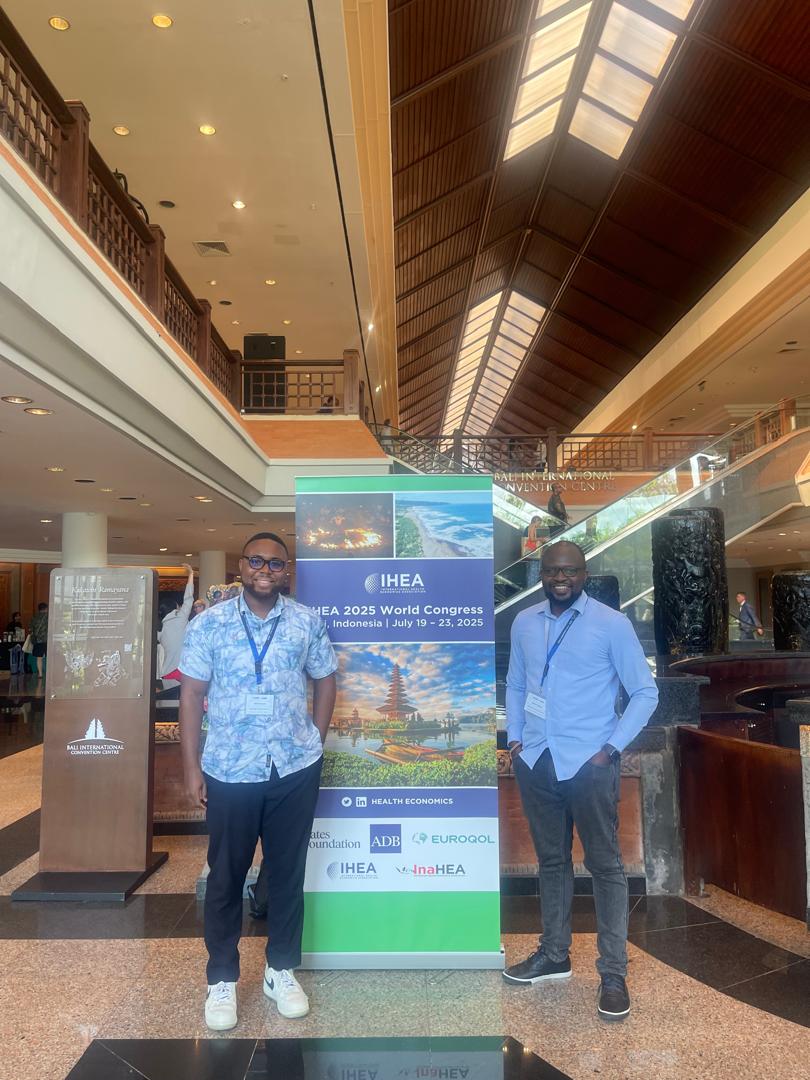
IHEA World Congress 2025Bali, Indonesia · July 2025
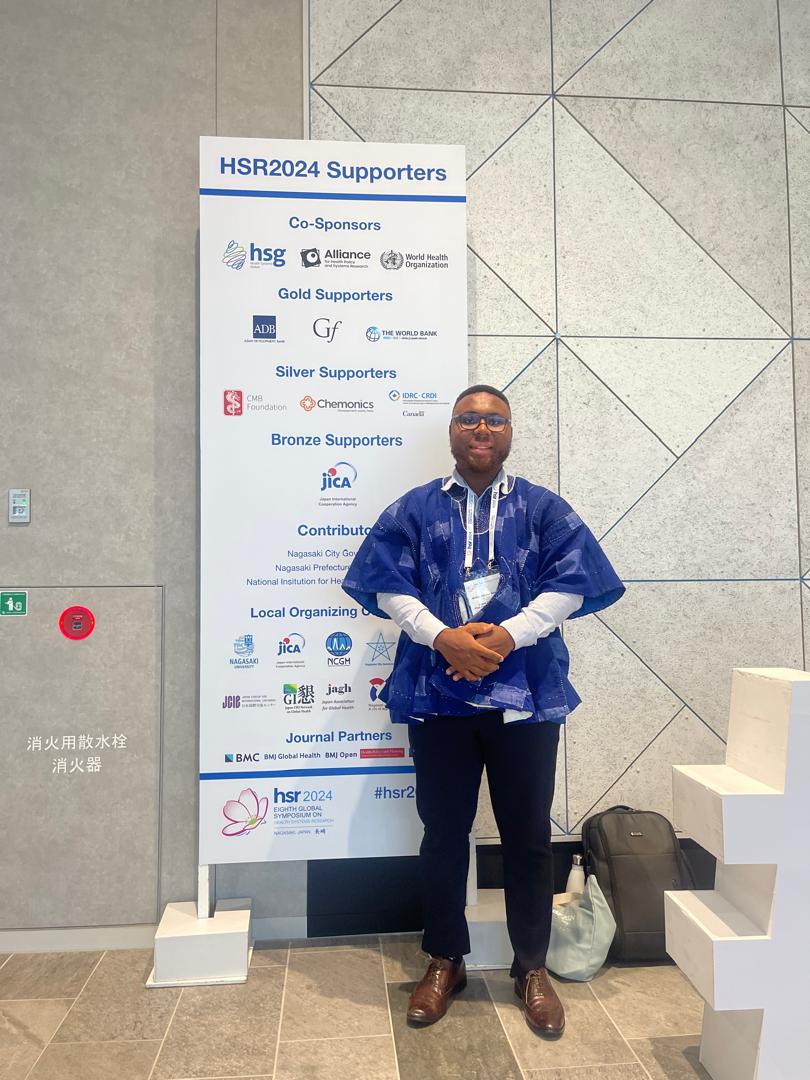
Health Systems Global 2024Nagasaki, Japan · 2024
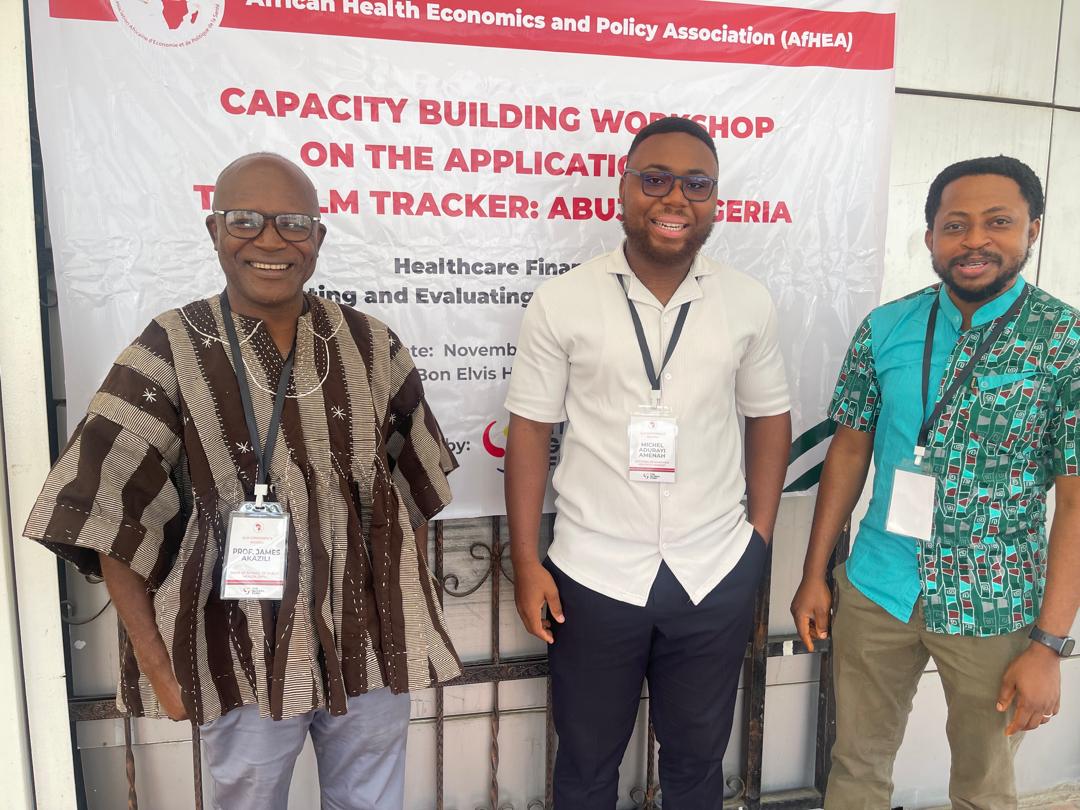
AfHEA ConferenceAbuja, Nigeria
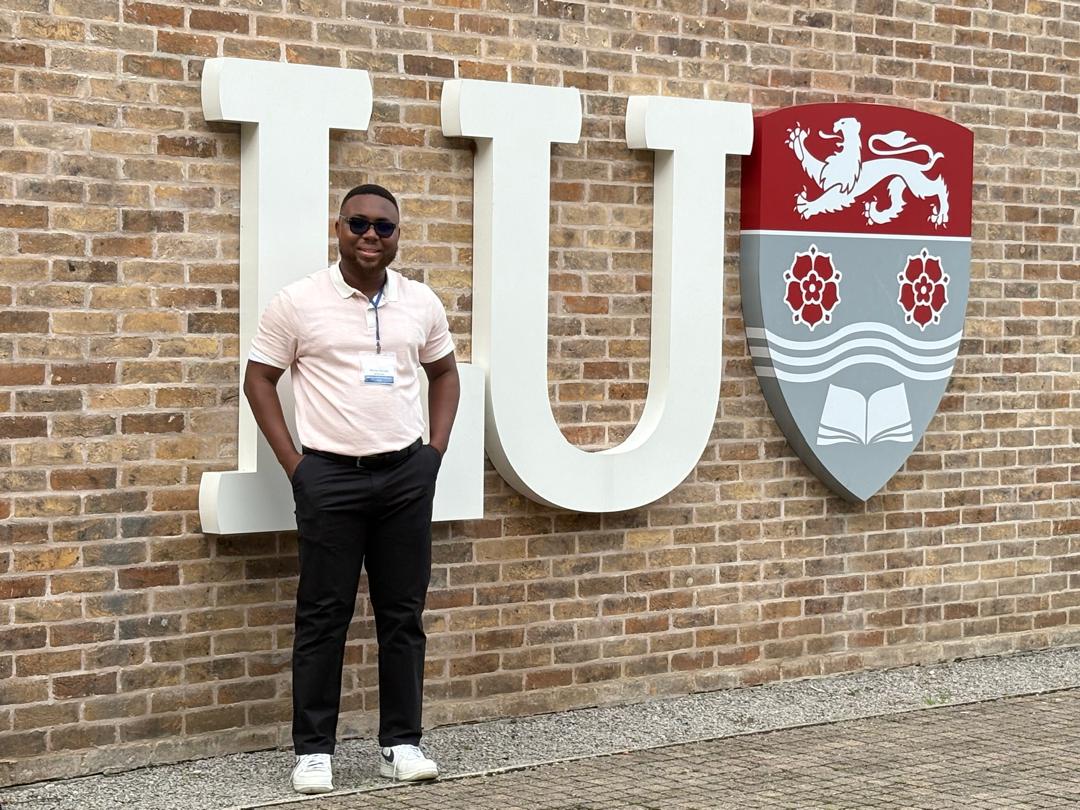
Lancaster University — NIHRLancaster, United Kingdom
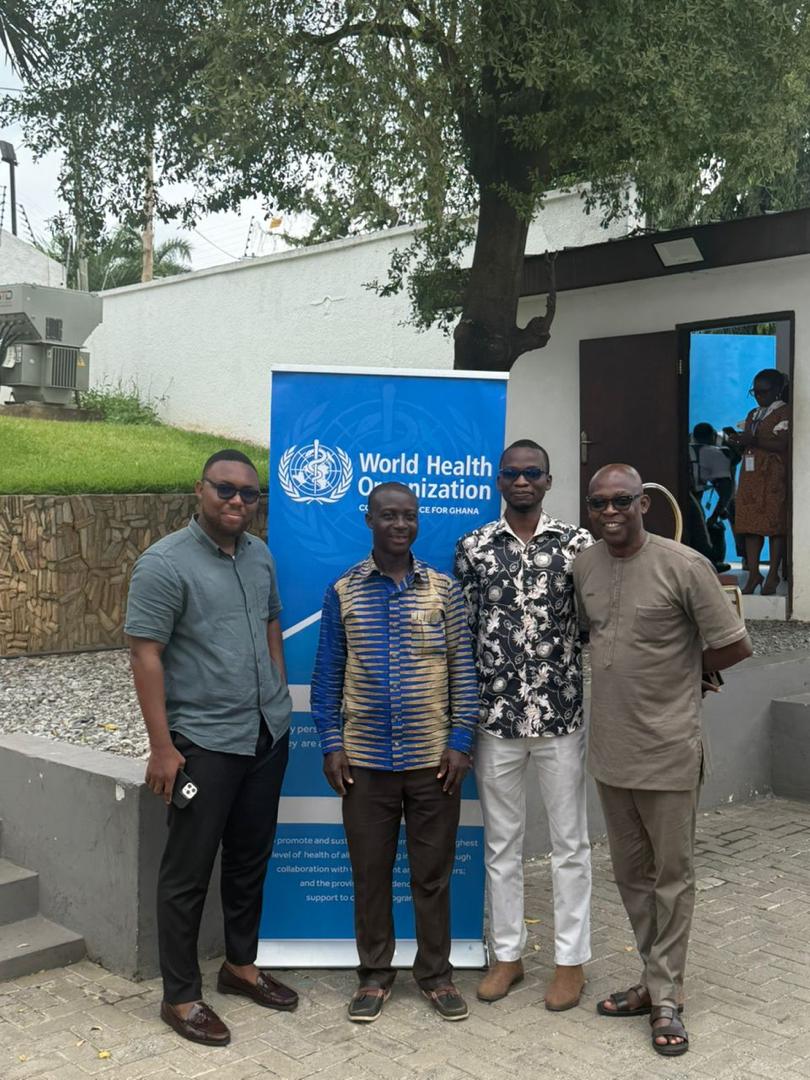
WHO GhanaWorld Health Organization, Accra
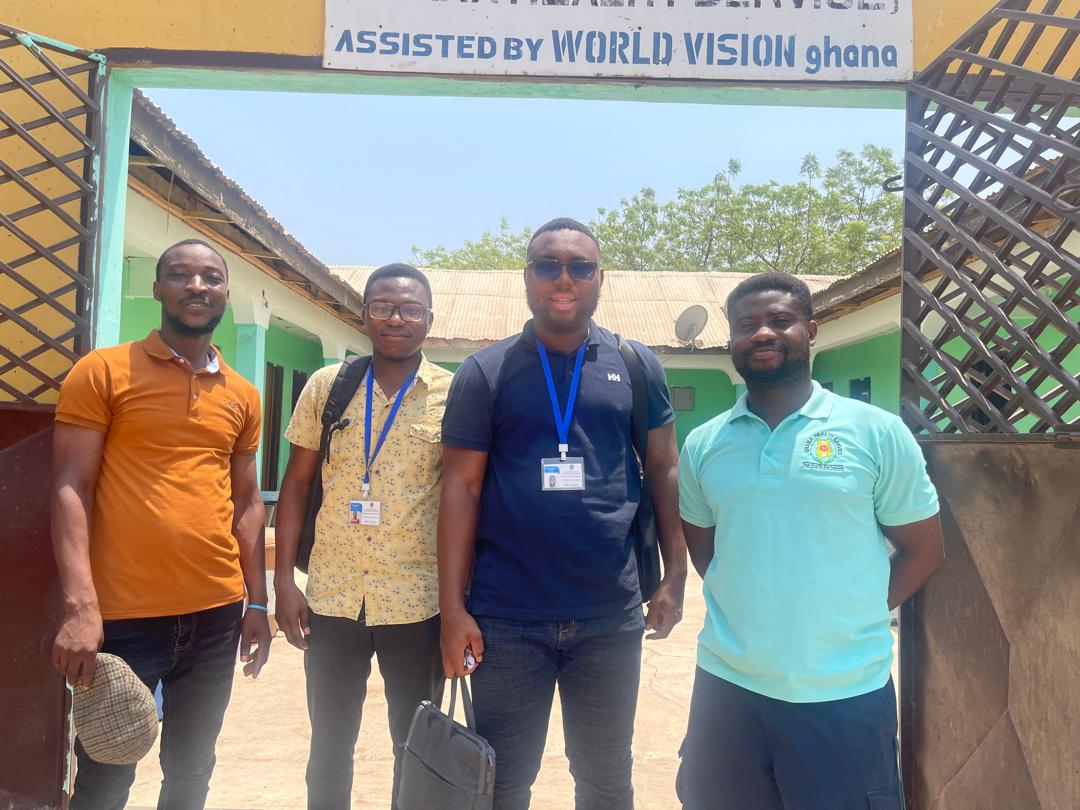
Community Health Field WorkGhana — Primary Care Research
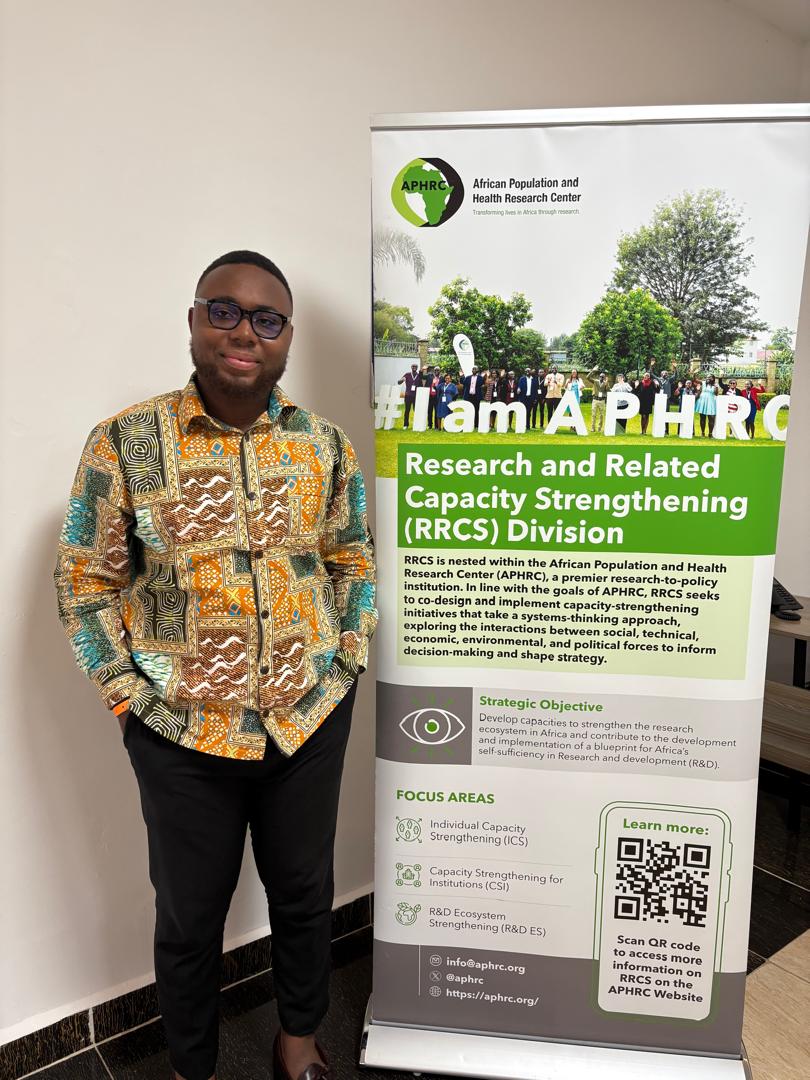
APHRC Research MeetingAfrican Population & Health Research Center
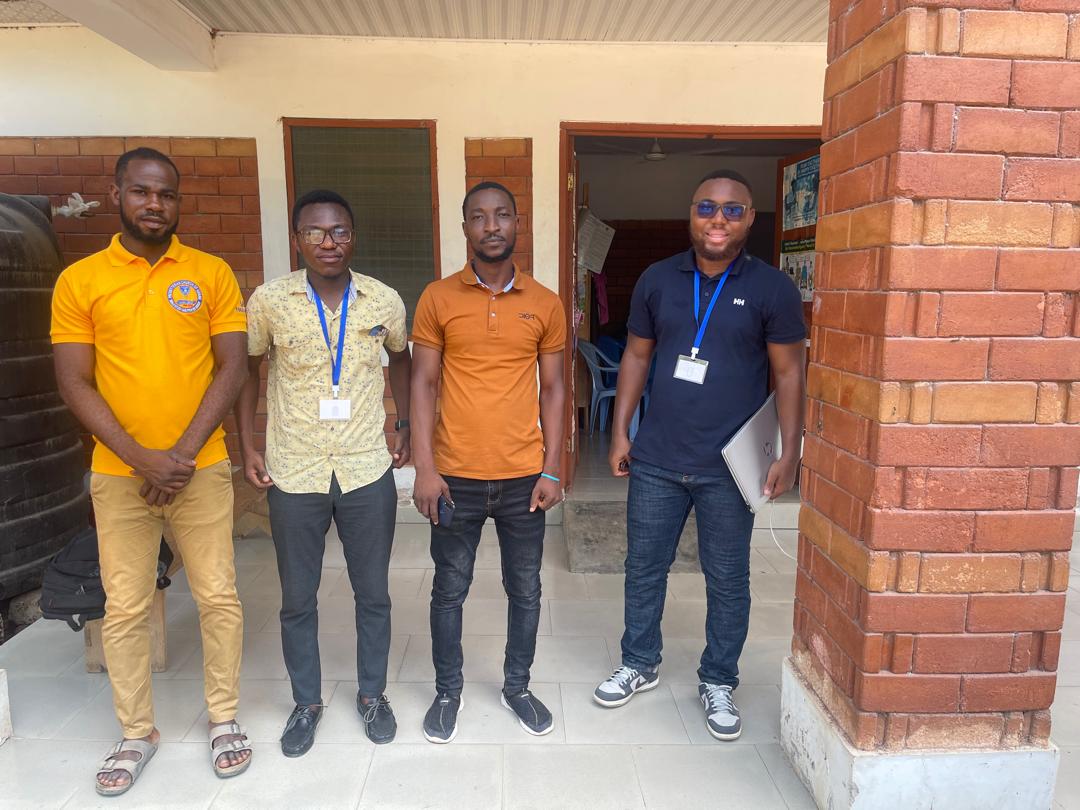
Research in the FieldWest Africa — Health Systems Fieldwork
Advocacy
Beyond Research
Environmental Integrity & Anti-Galamsey Advocacy
Ghana's illegal artisanal mining crisis — known locally as galamsey — represents one of the most urgent environmental and public health challenges facing the country. Illegal mining pollutes water bodies, degrades arable land, and devastates communities that depend on natural resources for their livelihoods and health.
Through Rewrite to Build Africa, I advocate for evidence-based environmental governance, accountability in extractive industries, and policies that protect Ghana's ecological heritage while creating sustainable economic pathways. This work connects my research on environmental sustainability to frontline advocacy and community engagement.
Professional Journey
Work Experience
A track record spanning health economics research, quantitative analysis, international consulting, and policy development — across Ghana, West Africa, and global collaborations.
Leading the development of Ghana’s national report for the GSHS and G-SHPPS, commissioned by UNESCO in collaboration with GES, GHS, and WHO.
Synthesized and interpreted nationally representative survey data on adolescent health behaviours including nutrition, mental health, physical activity, substance use, and school health environments.
Coordinated stakeholder consultations with ministries, development partners, and civil society to validate findings and integrate policy-relevant feedback.
December 2024 – Present
AfHEA
Research Consultant
UNFPA SRHR Budget and Expenditure Analysis — African Health Economics Association
Developed tools and methodologies for SRHR budget and expenditure analysis in Rwanda and South Sudan, conducting situation analyses and desk reviews.
Collaborated with UNFPA country teams and local consultants to collect, analyse, and disaggregate data, producing comprehensive insights and actionable recommendations.
Facilitated stakeholder engagement, including validation meetings, to finalise findings and ensure alignment with country-specific contexts.
Delivered detailed reports, databases, and presentations on SRHR budget and expenditure analysis.
April 2024 – Present
Ghana College of Physicians & Surgeons
Health Economist / Quantitative Researcher
STOP-NCD in West Africa Project — Ghana College of Physicians and Surgeons, Accra
Conducting economic evaluations and efficiency analyses of co-produced interventions under the STOP-NCD project, supporting Work Package 3 and Policy Theme 3.
Collaborating with multidisciplinary teams to assess the effectiveness of interventions aimed at improving NCD management across West Africa.
Leading quantitative research and contributing to policy-focused evaluations under senior health economists and project leads.
Designed and implemented the Service Availability and Readiness Assessment (SARA) to analyse healthcare readiness for NCD management.
April 2025 – Present
Rewrite to Build Africa
Lead, Research and Policy
Rewrite to Build Africa — Accra, Ghana
Lead the organisation’s research and policy agenda on environmental sustainability, climate change, and development policy across Africa.
Coordinate and host high-level webinars and policy dialogues on carbon pricing pathways, climate change and Africa’s economic potential, and sustainable food systems.
Develop and oversee research initiatives producing evidence-based policy recommendations on climate resilience, environmental governance, and sustainable development.
December 2023 – Present
WHO · UNICEF · Ghana
Assistant to Lead-Consultant
School Health Policy in Ghana — WHO / UNICEF
Assisting in reviewing the existing school health policy by engaging with diverse stakeholders and technical groups across Ghana.
Traveling with the lead consultant to various parts of Ghana to meet stakeholders who inform the policy.
Supporting coordination of the policy review process including scheduling, documentation, and stakeholder communication.
Actively participating in drafting the revised national school health policy.
November 2024 – July 2025
University of Ghana
Junior Investigator
Water and Sweetened Beverage Purchasing Decisions — University of Ghana, Accra
Analysed Consumer Price Index data using a Difference-in-Differences approach to assess the impact of sugar-sweetened beverage taxes on prices and consumption patterns.
Evaluated purchasing behaviours among low-income households in peri-urban Accra, focusing on pre- and post-SSB tax implementation changes.
Assisted in preparation and writing of research findings for publication and dissemination.
Monitored price trends of water and sweetened beverages, integrating findings into policy recommendations.
September 2023 – March 2024
UC Berkeley
Research Assistant
Competition and Entry in Digital Financial Markets (RCT) — University of California, Berkeley
Collaborated with the Principal Investigator and key stakeholders including the Ghana Statistical Service, MTN M-Money, and G-Money to design and implement a study on digital financial markets in Ghana’s Eastern region.
Contributed to the development of research instruments and protocols tailored to the study population’s specific characteristics.
February 2022 – March 2024
Ghana College of Physicians & Surgeons
Data Manager / Quantitative Researcher
Adolescent Reproductive and Mental Health Care in West Africa — Ghana College of Physicians and Surgeons, Accra
Designed and managed a comprehensive database system to store and analyse research data from Ghana, Niger, and Burkina Faso.
Led data collection activities including developing instruments and protocols and coordinating with stakeholders to enhance research outcomes.
Contributed to drafting research papers on the efficiency of primary healthcare facilities in delivering ASRH services.
September 2018 – February 2022
GIMPA
Teaching / Research Assistant
Department of Economics — Ghana Institute of Management and Public Administration, Accra
Organised and conducted practical STATA sessions for Econometrics classes for students in MSc Economic Policy, MSc Financial Economics, and MPhil Economics.
Facilitated tutorials for Managerial Economics (MBA) courses, fostering students’ understanding of key economic principles and decision-making processes.
July 2021 – August 2021
GIMPA
Research Assistant
Ghana Peri-Urban Vegetables Value Chain Project — Ghana Institute of Management and Public Administration, Accra
Contributed to data collection and analysis for an implementation completion report on a US$2.85 million JSDF grant to the Government of Ghana.
Oversaw and coordinated field implementation activities, ensuring timely execution and adherence to project guidelines.
Academic Teaching
Teaching Experience
Alongside research and consulting, I have contributed to graduate and postgraduate economics education at GIMPA, teaching quantitative and applied economics courses across multiple master’s programmes.
Assisted in delivering practical STATA-based tutorial sessions, supporting students in applying econometric methods including regression analysis, panel data, instrumental variables, and time-series techniques.
Provided individual guidance to students working through problem sets and research assignments, helping build their analytical confidence and data handling skills.
2018 – 2022
GIMPA
Teaching Assistant — Managerial Economics
MBA Programme — GIMPA
Assisted in facilitating tutorials for the Managerial Economics module, supporting MBA students through demand analysis, cost theory, market structures, and economic decision-making frameworks.
Helped students apply economic reasoning to business and policy problems, strengthening their analytical and modelling skills for management contexts.
Research
Research Portfolio
My research agenda addresses some of the most pressing challenges in African health systems and development — producing evidence designed to inform policy, resource allocation, and service delivery reform across West Africa and beyond.
🌍
GBD Collaborator — Institute for Health Metrics and Evaluation (IHME)Contributing to the Global Burden of Disease study: the world's most comprehensive systematic analysis of disease burden and risk factors across 200+ countries. The 2023 cardiovascular disease paper has accumulated 225+ citations.
Global Burden of Cardiovascular Diseases and Risk Factors — GBD 2023
⭐ 225 citationsPublished
Journal of the American College of Cardiology (JACC), 2025 · GBD 2023 Heart Disease Collaborators (incl. Amenah MA)
Comprehensive global analysis of cardiovascular disease burden and risk factors across 204 countries and territories. A landmark GBD 2023 output representing the collective work of the IHME Global Burden of Disease collaboration — one of the most-cited health research outputs of 2025.
Catastrophic Health Payments in Ghana Post-NHIS Implementation
10 citationsPublished
BMJ Global Health, 2025 · Akazili J, Amenah MA, Chola L, Ayanore MA, Ataguba JE
Analysis of service-specific health expenditures and catastrophic payment incidence following Ghana's National Health Insurance Scheme rollout, with equity implications for vulnerable households.
Adolescent Mental Health Services in West Africa: Burkina Faso, Ghana & Niger
8 citationsPublished
Child & Adolescent Psychiatry and Mental Health, 2024 · Amenah MA, Ibrahim N, Tapsoba et al.
Comparative analysis of adolescent mental health service availability, readiness, and technical efficiency across three West African countries, with policy recommendations for regional health system strengthening.
Energy Poverty & Health Outcomes in Ghana
3 citationsPublished
BMC Public Health, 2025 · Nyame-Baafi K, Darmoe JA, Ohemeng W, Amenah MA et al.
Assessing the effect of energy poverty on health outcomes in Ghana, examining how limited access to reliable energy intersects with health service utilization, wellbeing, and household-level vulnerability.
Catastrophic Expenditure Among Patients with Long Bone Fractures in Ghana
2 citationsPublished
BMC Health Services Research, 2025 · Buunaaim, Amenah MA et al.
Hospital-based analysis of catastrophic health expenditure among patients with long bone fractures in Ghana's major teaching hospitals, with implications for surgical care financing policy.
Technical Efficiency of Primary Healthcare for Adolescent SRHR in Ghana
2 citationsPublished
PLOS ONE, 2025 · Amenah MA et al.
Data envelopment analysis of technical efficiency in primary healthcare delivery of adolescent sexual and reproductive health services across Ghana, with implications for resource allocation and facility management.
Depression Prevalence & Socioeconomic Determinants in Ghana
1 citationPublished
Scientific Reports, 2025 · Amenah MA, Fenny A, Akazili J, Mirzoev T, Agyepong IA, Mason T
Estimating the prevalence and socioeconomic determinants of depression in Ghana, exploring health-seeking behaviour and the structural drivers of mental health outcomes among Ghanaian youth and adults.
SRHR Service Readiness in Ghana's Primary Health Care System
1 citationPublished
Reproductive Health, 2025 · Amenah MA et al.
Assessment of service availability and readiness for sexual and reproductive health and rights services across primary healthcare facilities in Ghana — benchmarking against WHO SARA standards and identifying critical gaps.
Youth Unemployment & Socioeconomic Outcomes in Ghana
1 citationPublished
SN Social Sciences, 2025 · Amenah MA et al.
Examining the determinants and socioeconomic consequences of youth unemployment in Ghana, with a focus on labour market transitions, skills mismatches, and policy implications for employment reform.
NCD Institutional Capacity in Ghana's Primary Health Care System
New · 0 citationsPublished
BMC Primary Care, 2026 · Amenah MA, Adjei-Banuah et al.
Multi-method study assessing institutional capacity for NCD care across primary healthcare facilities in Ghana, including service availability, readiness assessments, and systemic barriers to care delivery.
Technical Efficiency of Primary Healthcare in Burkina Faso
New · 0 citationsPublished
BMC Primary Care, 2026 · Amenah MA et al.
Analysis of technical efficiency in primary healthcare facilities in Burkina Faso using Data Envelopment Analysis, examining resource utilization patterns and the determinants of efficiency variation across facilities.
Drivers of NCD Access in Ghana's Primary Health Care System
New · 0 citationsPublished
BMC Health Services Research, 2026 · Amenah MA et al.
Identifying and quantifying the individual, facility-level, and structural drivers of non-communicable disease care access in Ghana's primary health care system, using mixed-methods analysis.
Economic Burden of Type 2 Diabetes Mellitus in Ghana
New · 0 citationsPublished
Health Science Reports, 2026 · Amenah MA et al.
Estimating the direct and indirect economic burden of Type 2 diabetes mellitus on patients, households, and health systems in Ghana — providing the evidence base for cost-effective intervention prioritization and health insurance design.
COVID-19 Vaccine Equity & Uptake in Ghana
New · 0 citationsPublished
Frontiers in Public Health, 2026 · Amenah MA et al.
Analysis of equity dimensions in COVID-19 vaccine uptake across Ghana, examining socioeconomic, geographic, and demographic determinants of vaccination and implications for pandemic preparedness policy.
Financial Inclusion & Energy Poverty in Ghana: Multidimensional PCA Approach
0 citationsPublished
Discover Sustainability, 2025 · Kabutey-Ongor M, Amenah MA, Yorke FR
Constructing a multidimensional financial inclusion index via PCA to examine the relationship between financial inclusion and energy poverty in Ghana's informal sector, with equity implications for economic policy.
Under Review & Revision
8
Youth Unemployment, Happiness & Life Satisfaction in Africa
Under Revision
Journal of Happiness Studies · Under Revision
Examining the relationship between youth unemployment, subjective wellbeing, happiness, and life satisfaction across African countries — with policy implications for employment-oriented social protection.
COVID-19 Vaccine Delivery: Stakeholder Perspectives in Ghana
Under Revision
Discover Health Systems · Under Revision
Qualitative multi-stakeholder analysis of barriers and facilitators to COVID-19 vaccine delivery in Ghana — drawing on perspectives from health workers, community members, and policymakers.
Drivers of Multidimensional Financial Inclusion in Ghana
Under Revision
Cogent Economics & Finance · Under Revision
Identifying individual, household, and structural determinants of multidimensional financial inclusion in Ghana using composite index methodology, with implications for inclusive finance policy.
PHC Availability & Readiness for SRHR in Burkina Faso
Under Revision
BMC Health Services Research · Under Revision
Assessing the availability and readiness of primary healthcare facilities in Burkina Faso to deliver sexual and reproductive health and rights services — using WHO SARA methodology and mixed-methods analysis.
Adolescent SRHR Services in Niger: Availability & Readiness
Under Revision
BMC Health Services Research · Under Revision
Analysis of the availability and readiness of primary healthcare facilities to provide adolescent sexual and reproductive health services in Niger, identifying critical gaps and policy priorities.
Socioeconomic Determinants of Overweight & Obesity in Ghana
Submitted
Scientific Reports · Submitted
Examining the socioeconomic, demographic, and environmental determinants of overweight and obesity in Ghana using nationally representative survey data — with implications for NCD prevention policy.
Urbanization & NCD Mortality in Sub-Saharan Africa
Submitted
Population Health Metrics · Submitted
Cross-country panel analysis of the relationship between urbanization trajectories and non-communicable disease mortality across Sub-Saharan Africa, informing regional NCD policy and urban health planning.
Institutional & Systemic Drivers of NCD Access in West Africa
Submitted
Co-authored with Yasmin Jahan et al. · Submitted
Multi-country investigation of the institutional and systemic factors shaping access to non-communicable disease care across West African health systems — with policy implications for regional NCD governance.
Active Research Projects
5
PhD Thesis: NCD Screening & Referral Intervention Evaluation in Ghana
Ongoing
Lancaster University · NIHR Global Research Centre · 2024–2028
Economic evaluation and efficiency analysis of co-produced interventions targeting NCD screening and referral pathways in Ghana's primary healthcare system, as part of the STOP-NCD in West Africa Project.
Consumption Inequality in Ghana: RIF Decomposition Analysis
Ongoing
University of Ghana · Ongoing
Applying Recentered Influence Function (RIF) decomposition to understand the drivers of household consumption inequality across Ghana, examining contributions of education, employment, and geography along the full distribution.
Health Financing, Human Capital & Development in Sub-Saharan Africa
Ongoing
Cross-country panel analysis · Ongoing
Examining the relationship between health financing mechanisms, human capital accumulation, and long-run economic development across Sub-Saharan African countries, with implications for fiscal policy and health investment strategies.
SSB Tax Evaluation: Impact on Prices & Consumption (DiD)
Ongoing
University of Ghana · Nov 2024 – Jul 2025
Evaluating Ghana's sugar-sweetened beverage (SSB) tax using difference-in-differences applied to Consumer Price Index data. Focuses on price effects and purchasing behaviour among low-income households in peri-urban Accra.
Multi-country analysis of SRHR budget allocations and expenditure in South Sudan, Rwanda, DRC, and Madagascar. Developed frameworks for situation analysis, data disaggregation, and stakeholder validation in collaboration with UNFPA country teams.
Research Impact
Why This Work Matters
📋
Policy Evidence
Health ministries in West Africa need locally-generated, rigorously produced evidence to make financing and service delivery decisions — not models imported from high-income settings.
⚖️
Equity & Access
Catastrophic health expenditure pushes millions of households into poverty. My research quantifies these dynamics so that protection mechanisms can be designed to reach those who need them most.
🔬
Rigorous Methods
From econometric decomposition to economic evaluation and efficiency analysis, every project applies methods appropriate to the African data environment — building a body of work that can be scrutinised and built upon.
Consulting
Applied Expertise for Real-World Impact
I work with international health organizations, governments, and NGOs to deliver evidence-based consulting across health economics, policy analysis, data management, and strategic research design.
Services
Consulting Engagements
🌍
SRHR Multi-Country Budget & Expenditure Analysis
UNFPA / African Health Economics Association (AfHEA)
Research consulting across South Sudan, Rwanda, DRC, and Madagascar — developing methodological frameworks for SRHR budget tracking, situation analysis, expenditure disaggregation, and policy-relevant reporting, including stakeholder validation workshops.
SRHRBudget AnalysisUNFPAMulti-country
📊
Skills Mismatch Survey
Ghana Ministry of Labour & Ghana Statistical Service
Collaborating with Ghana's Ministry of Labour and Ghana Statistical Service to design and implement a national skills mismatch survey — examining gaps between labour market demands and workforce capabilities, with data analysis and policy-facing reporting for employment reform.
Labour MarketSurvey DesignGovernment
🏥
Health Systems Strengthening & Policy Advisory
International Health Organizations · Governments
Strategic advisory on health systems strengthening, NCD policy design, and primary healthcare reform for government agencies, development partners, and international health organizations across West Africa.
Policy AdvisoryHealth SystemsWest Africa
📑
Research Design & Statistical Analysis
International Organizations · Academic Institutions
End-to-end research support: study design, survey instrument development, data management and cleaning (GLSS, AHIES, GSPS, CPI, EHCVM datasets), STATA-based econometric analysis, and manuscript preparation for peer-reviewed publication.
STATAEconometricsData ManagementPublication
Past & Current Partners
Organizations I've Worked With
PartnersWHOUNICEFUNFPAUNESCOIHME / GBDAfHEARSTMH / NIHRUC BerkeleyGhana Health ServiceGhana Statistical ServiceGhana College of PhysiciansMinistry of Labour
Community
Building the Next Generation of African Health Economists
I am building an early-career research network for Ghanaian and Nigerian researchers working at the frontiers of health financing, equity, and development economics — a community designed to accelerate impact and foster collaborative science.
The Vision
A Platform for Early-Career Researchers
Despite the growing body of African health economics research, early-career researchers in Ghana, Nigeria, and across Sub-Saharan Africa often face structural barriers to collaboration, mentorship, funding access, and publication. The networks and resources that accelerate careers in high-income settings are simply not equally available.
This planned research network is designed to change that — providing a structured community for rigorous, policy-relevant research in health financing, catastrophic health expenditure, equity, and the socioeconomic determinants of health. It is built on the conviction that African health challenges require African researchers, African data, and African solutions.
🤝
Peer Collaboration
Structured co-authorship opportunities, joint research proposals, and collaborative data analysis across institutions in Ghana and Nigeria.
🎓
Mentorship & Capacity
Research methodology training, grant writing support, and mentorship from established researchers and international collaborators.
📣
Policy Amplification
Translating research into policy briefs, stakeholder engagement, and conference presentations that connect evidence to decision-makers.
Research Focus
Network Research Priorities
💰
Health FinancingResource mobilization, insurance mechanisms, out-of-pocket payments, and fiscal space for health in Ghana and Nigeria.
💸
Catastrophic Health ExpenditureMeasurement, drivers, and policy responses to financial hardship from illness across low- and middle-income settings.
⚖️
Health EquityInequalities in health access, outcomes, and financing — and the policy levers that can reduce them.
📈
Socioeconomic Determinants of HealthEducation, income, employment, housing, and the upstream drivers that shape population health trajectories.
🏥
Primary Healthcare SystemsService availability, readiness, efficiency, and the organizational factors shaping community-level health delivery.
🌍
Regional & Cross-Country AnalysisComparative research across West Africa generating regionally-relevant evidence for multilateral health policy.
Join the Network
Are you an early-career health economist, development economist, or health researcher based in Ghana or Nigeria? We're building something meaningful — and your work belongs at the table.
Contact
Get in Touch
Whether you're interested in research collaboration, consulting, the early-career network, or policy dialogue — I'd be glad to hear from you.
Location & Contact
Michel Adurayi Amenah
📍
Location
Accra, Ghana
📧
Email
michel.adurayi@gmail.com
🔗
LinkedIn
Michel Adurayi Amenah
Institutional Affiliations
Lancaster University — PhD Researcher
IHME — GBD Collaborator
Rewrite to Build Africa — Head of Research & Policy
AfHEA — Member
iHEA — Member, Africa Convenor (ECR SIG)
Open to:
Research collaboration · Consulting engagements · Conference presentations · Policy advisory · Early-career network participation
Send a Message
✅
Message Sent
Thank you for reaching out. I'll be in touch shortly.
Blog
Thoughts on Health, Development & Africa
A space for honest reflection on research, policy, and the work of building a better Africa — written from the field, the conference room, and everywhere in between.
Health Policy · OpinionMay 2026
Starting Where It Matters Most: Ghana's Free Primary Healthcare Takes Its First Steps
Ghana has just launched one of its most ambitious health commitments in recent memory — free primary healthcare for all citizens. And in a telling sign of intent, the rollout is beginning not in the cities, but in the most deprived rural communities.
Personal FinanceEconomicsAug 2026
What If the “Right” Money Advice Is Wrong for You?
Save before you spend. Avoid debt. Buy land before you buy a car. Sensible rules, all of them. But two people can face identical numbers and completely different realities, and the optimal choice can change with them.
EssayDataAug 2026
Are You Above Average?
Above average in what? Height, education, savings, debt? And should you even want to be? On benchmarks, the rooms we choose to stand in, and why the same person can be above average and below average on the same afternoon.
Personal EssayAug 2026
The Weight of a Wingbeat
A friend gave me an idea during my undergraduate days that I have never quite put down since. Notes on the butterfly effect, the decisions that quietly become our lives, and the patterns families pass down without ever deciding to.
Personal EssayJul 2026
The Dating Pool Paradox
A simple theoretical model of why her options and his options move in opposite directions as they both age — and what a chart makes obvious that a conversation never quite can.
ClimateOpinionJun 2026
The Rain Does Not Negotiate
Heatwaves are breaking records across Europe. Floods keep returning to the same streets in Accra. They are not the same disaster, but they are no longer a coincidence either. Two continents, one June.
Research PracticeJun 2026
The Research Assistant I Could Never Afford
On AI agents, economics research, and the one skill that will separate serious scholars from the noise. The barrier to producing research is falling fast. What is not falling is the ability to know when the output is wrong.
Technology · AfricaMay 2026
Africa's Moment: Why the AI Revolution Is the One We Cannot Afford to Miss
Every civilisation-defining shift in history has created winners and losers — not based on who was smartest, but on who moved first. For the first time, Africa's youth have the tools, the timing, and the numbers to move first. The window is open. The question is whether we walk through it.
Health PolicyOpinionMay 2026
Starting Where It Matters Most: Ghana's Free Primary Healthcare Takes Its First Steps
Ghana has just launched one of its most ambitious health commitments in recent memory — free primary healthcare for all citizens. And in a telling sign of intent, the rollout is beginning not in the cities, but in the most deprived rural communities. This is a policy worth watching closely, and worth understanding well.
MA
Michel Adurayi Amenah
Economist · Development & Health Economics · Opinion
6 min read
As a Ghanaian and a health economist, I have spent considerable time studying the quiet ways in which cost shapes health decisions across this country. The data is consistent, and it tells a sobering story: for many households, especially in rural and low-income communities, the decision to seek care is never purely medical. It is financial. The fear of a bill at the end of a consultation keeps people away from facilities until conditions become impossible to ignore — and by then, much harder to treat.
Ghana's newly launched free primary healthcare policy is a direct response to that reality. And it is barely weeks old. This is not the moment for sweeping verdicts — positive or negative. It is, however, exactly the right moment to understand what Ghana is attempting, why it matters, and what will need to go right for this vision to become a lived reality for every citizen. I want to hold two things together: genuine excitement about what has been launched, and honest reflection on the road ahead.
Starting from the Margins — Deliberately
One of the most significant — and most encouraging — features of Ghana's rollout strategy is where it is beginning. Rather than launching first in urban centres where health infrastructure is comparatively stronger, the government has chosen to prioritise the most deprived rural communities. This is an equity-first approach, and it deserves recognition.
For too long, geography has been a silent determinant of health outcomes in Ghana. A child born in a remote northern district and a child born in Accra do not start life with the same access to care. By anchoring the pilot in the communities that have historically been left furthest behind, Ghana is signalling that universal healthcare must mean something in practice — not just in policy documents. The lessons learned from this rural-first approach will be critical in shaping how the policy scales nationally.
What the Policy Gets Right
Beyond the rollout strategy, the policy itself addresses one of the most persistent barriers to healthcare in Ghana: cost. Financial barriers are among the most consistent predictors of delayed or foregone care — particularly among low-income households and women of reproductive age. Removing user fees at the primary care level is a direct intervention against that barrier.
Preventive care is at the heart of this vision. One of the most critical — and often underappreciated — pillars of free primary healthcare is its explicit focus on preventive activities. Ghana's primary care system has increasingly sought to energise preventive programming: health education, routine screenings, antenatal care, and community outreach. The logic is sound. Prevention is not only morally compelling; it is economically rational. Investing upstream in health behaviours and early detection saves far more than treating advanced disease.
When people do not fear a bill at the end of a consultation, they are more likely to present early — before a manageable condition becomes a crisis. This benefits individuals and a health system that is already stretched. Early detection and early treatment are cheaper than emergency responses and hospitalizations.
The NCD Double Burden: A Crisis at Our Doorstep
Perhaps nowhere is the case for robust free primary healthcare more urgent than in the context of non-communicable diseases (NCDs). Ghana, like much of Sub-Saharan Africa, faces what researchers call the “double burden” of disease: the unfinished agenda of infectious illness alongside the rapidly growing weight of NCDs — hypertension, diabetes, stroke, and cancers.
This is not an abstraction for me. Within my own extended family, I have lost close to three or four people to NCDs — hypertension, specifically. These were not sudden, unpredictable deaths. They were the end result of conditions that, caught early, are highly manageable. NCDs are, in the language of public health, ambulatory care-sensitive conditions — meaning that timely, quality primary care can prevent hospitalisation, complications, and death. The tragedy is not that these conditions are incurable; it is that they are being met too late.
“NCDs are ambulatory care-sensitive conditions. When caught early, they are manageable. When missed, they are devastating. Free primary healthcare, properly resourced, is our single strongest tool against this tide.”
Free primary healthcare, if genuinely implemented, positions Ghana to intercept this burden early. Routine blood pressure checks, blood glucose screening, and basic counselling on diet and lifestyle — these are not expensive interventions. But they require consistent access, and access requires removing the cost barrier at the facility door.
The Road Ahead: Questions Worth Asking Now
Every ambitious policy faces implementation realities, and asking hard questions early is an act of support — not scepticism. For free primary healthcare to fulfil its potential, Ghana will need to address some well-known structural challenges in its health system.
Many CHPS compounds and district hospitals already operate under significant strain — long queues, overstretched staff, and essential medicines that are intermittently out of stock. An influx of newly empowered patients, which is exactly what a successful free healthcare policy should produce, will place additional demand on these facilities. Managing that demand well requires investment in workforce, supply chains, and physical infrastructure running in parallel with the policy rollout.
Financing sustainability through the National Health Insurance Scheme (NHIS) — particularly timely reimbursements to facilities — will also be critical. Facilities that are not reimbursed promptly may begin to ration care informally, quietly undermining the very access the policy is designed to guarantee.
Telemedicine: Promising, But How Sustainable?
One innovation attracting growing attention alongside the policy is telemedicine — the use of digital platforms to extend healthcare consultations beyond the walls of physical facilities. In principle, telemedicine holds real promise for Ghana: a country with significant geographic disparities in access, where a patient in a remote district may travel hours to see a health professional.
But we must ask the harder question: how sustainable is this, really? Telemedicine requires reliable electricity, internet connectivity, digital literacy, and devices — preconditions that remain unevenly distributed, particularly in the rural communities where the rollout is beginning. Used wisely — as a complement to, not a replacement for, physical primary care infrastructure — telemedicine can extend Ghana's reach. But it must be piloted rigorously, evaluated honestly, and scaled only where the conditions for sustainability genuinely exist.
A Hopeful, Eyes-Open Moment
Ghana has done something significant. In a region where public health financing remains chronically underfunded, committing to free primary care — and choosing to begin with the most marginalised communities — is a statement of values and a standard to live up to.
What the policy needs now is not cynicism, but constructive accompaniment. Sustained investment in health workers, medicines, and facilities. A financing architecture that does not buckle under pressure. Preventive programming treated as the engine of the system, not an afterthought. And the voices of rural communities kept firmly at the centre — because the people in those queues will know, before any report does, whether this is working.
Ghana has taken its first step. With the right support and the right accountability, this journey can go the distance.
MA
Michel Adurayi Amenah
Michel is an economist specialising in development and health economics, based in Accra, Ghana, with expertise in health systems strengthening, health financing, and implementation research across Sub-Saharan Africa. The views expressed here are his own.
TechnologyAfricaOpinionMay 2026
Africa's Moment: Why the AI Revolution Is the One We Cannot Afford to Miss
Every civilisation-defining shift in history has created winners and losers, not based on who was smartest, but on who moved first. For the first time, Africa's youth have the tools, the timing, and the numbers to move first. The window is open. The question is whether we walk through it.
MA
Michel Adurayi Amenah
Economist · Development & Health Economics · Opinion
8 min read
Every generation, if it is paying attention, recognises the moment it is standing in. Not in real time, rarely. Usually only in hindsight, when historians have named the turning point, drawn the timeline, and made it all look inevitable. But some shifts are visible as they happen. The emergence of artificial intelligence as a general-purpose tool is one of them. And for Africa, a continent of 1.4 billion people, the youngest population on earth, and a long history of arriving late to someone else's revolution, this one may be different. This time, we have the chance to be early.
The Long Arc: How Humanity Has Always Been Remade
To understand what AI represents, it helps to zoom out, far out. Human civilisation has not progressed in a straight line. It has moved in punctuated leaps, each one triggered by a technology or idea so fundamental that it did not just change how people worked. It changed who people were, how they organised, and what was possible.
The Agricultural Revolution, roughly 12,000 years ago, was the first great reordering. Hunter-gatherer bands gave way to settled communities. Surplus food created specialisation. Specialisation enabled trade, writing, governance, and eventually cities. Everything we call civilisation rests on that first leap.
The Industrial Revolution, beginning in Britain in the 1760s, was the second. Steam power and mechanised production broke the ceiling on human physical output. It took a century to spread globally, but when it did, it restructured economies entirely, shifting populations from farms to factories, creating the modern city, and generating both extraordinary wealth and extraordinary inequality depending on where in the world you happened to be standing.
The Digital Revolution of the 1990s was the third. The internet collapsed distance. Information, once locked in libraries, universities, and the offices of powerful institutions, became portable and eventually nearly free. It created new industries, dissolved old ones, and gave individuals access to tools and audiences that once required corporate budgets.
Each of these revolutions shared something: they rewarded early movers and penalised latecomers. Africa, for various reasons including colonial extraction, structural underfunding, and geographic and political fragmentation, arrived late to both the Industrial and Digital revolutions. The consequences are visible in our infrastructure, our institutions, and the persistent gaps in global wealth and knowledge production.
Which is why the fourth revolution deserves our full attention.
The AI Revolution: Faster Than Anything Before It
What separates the AI revolution from its predecessors is not just its power. It is its speed. When ChatGPT launched in November 2022, it reached 100 million users in two months. Not two years. Two months. To appreciate how extraordinary that is, consider how long previous technologies took to reach the same milestone.
The Acceleration of Technology Adoption
Years taken for each technology to reach 100 million users
Sources: ITU, Statista, Reuters, UBS analysis (Jan 2023). Figures are approximate global user milestones.
The telephone took 75 years. Television took 13. The internet took 7. Facebook took 4.5 years. The iPhone, which transformed the world in its own right, took 3.5 years. ChatGPT took two months.
This is not just a faster version of what came before. This is a qualitatively different kind of diffusion, made possible by smartphones, cloud infrastructure, and the internet backbone that now reaches billions of people worldwide. The tools of this revolution ride on infrastructure that already exists. They do not require a new factory, a new power grid, or a new network to be built. They are available, today, to anyone with a phone and a data connection.
And that changes everything for Africa.
“Africa missed the Industrial Revolution because it was colonised. It arrived late to the Digital Revolution because of infrastructure gaps. The AI Revolution has no such barriers to entry. The tools are here, they are free, and the clock is running.”
Why Africa Is Uniquely Positioned
Africa has 1.4 billion people. More than 60 percent of the continent's population is under the age of 25. By 2050, one in four people on earth will be African. This is not a demographic footnote. It is a structural advantage of historic proportions, but only if that young population is equipped with the skills and tools of the current economy, not the last one.
Africa has also demonstrated, more than once, that it can leapfrog. When mobile banking arrived in the mid-2000s, much of Africa had no meaningful banking infrastructure to speak of. Rather than building the bricks-and-mortar system that took the West a century, African societies leapt directly to mobile money. M-Pesa in Kenya is now studied in economics departments around the world as a textbook case of leapfrogging, skipping an entire developmental stage by adopting the superior technology at the right moment.
AI offers the same opportunity, at a larger scale. A young person in Accra, Kampala, Nairobi, or Lagos today has access to tools that, just five years ago, were available only to well-funded research teams and large technology firms. And crucially, many of these tools are free, at least for now.
The Window Is Open, But Windows Close
This is perhaps the most important point, and I want to say it directly: the tools are free right now because the companies building them are in a land-grab phase. They are competing for users, for data, for market dominance. The generous free tiers across Claude, ChatGPT, Gemini, Perplexity, Canva AI, Notion AI, and GitHub Copilot are a strategic offer, not a permanent one.
The window will not stay open indefinitely. As these platforms mature and monetise more aggressively, what is free today will increasingly sit behind paywalls. The young person in Accra who learns these tools today will be building on a foundation. The one who waits five years may find the entry cost has risen significantly.
What can African youth build with these tools today? A health worker in a rural district can use AI to get a differential diagnosis checklist in under thirty seconds, cross-referenced with local disease prevalence data. A small business owner can generate professional marketing copy, financial projections, and a business plan without hiring a consultant. A university student can use AI as a research partner, one that reads the literature, summarises it, flags contradictions, and suggests gaps, compressing years of methodological learning into months. A developer can build and ship software products alone that previously required a team. A farmer can get agronomic advice, climate projections, and market price data in a single conversation.
None of these require a PhD. None require expensive hardware. They require curiosity, a smartphone, and the willingness to learn by doing.
“The young person in Accra who masters these tools today is not behind. For perhaps the first time in a generation, they are exactly where the frontier is.”
A Note of Honest Caution
I believe in this opportunity deeply. But I would not be doing my job as an economist if I did not note the risks alongside the possibilities.
AI also displaces. Call centres, routine data processing, certain categories of writing and translation, and entry-level legal and financial analysis are roles that employed many young Africans, and that AI will increasingly handle at lower cost. The same revolution that creates opportunity for those who harness it will eliminate certain rungs on the economic ladder that less-equipped workers depended on.
There is also the question of whose AI this is. The large language models were trained predominantly on English-language content, on Western cultural assumptions, on data generated in high-income contexts. The subtle biases this introduces in medical advice, legal reasoning, and financial guidance are real, and the communities least served by AI's training data are often those with the least recourse when it gets things wrong.
These are not reasons to disengage. They are reasons to engage critically: to build African datasets, to train African engineers and AI researchers, to advocate within international forums for AI governance frameworks that do not simply export Silicon Valley's assumptions to the rest of the world.
The Work That Remains
History does not distribute revolutions fairly. But it does offer windows. The Agricultural Revolution rewarded those who adopted it and marginalised those who did not. The Industrial Revolution built the modern West on the labour, often coerced, of people who saw little of its benefits. The Digital Revolution created a new global elite while leaving billions in what researchers call the digital divide.
The AI Revolution is, right now, being written. The rules of who benefits are not yet fixed. The infrastructure of who gets to build, who gets to profit, and whose problems get solved is still being laid. Africa, with its youth, its mobile connectivity, its tradition of adaptive ingenuity, and its immense unmet needs that AI could help address, has a genuine claim to this moment.
The question is not whether AI will reshape the world. It already is. The question is whether the young economist in Tamale, the developer in Lagos, the nurse in Kigali, and the entrepreneur in Nairobi will be among those doing the reshaping, or among those being reshaped.
The tools are in your hands. The moment is now. Use it.
MA
Michel Adurayi Amenah
Michel is an economist specialising in development and health economics, based in Accra, Ghana. He writes on evidence, equity, technology, and African development. The views expressed here are his own.
Essay · Artificial Intelligence & Research Practice
The Research Assistant I Could Never Afford
On AI agents, economics research, and the one skill that will separate serious scholars from the noise.
MA
Michel Adurayi Amenah
Economist · Development & Health Economics · 2026
7 min read
I will be honest with you. When I first heard about AI agents that could do work on your behalf, I was sceptical. I am a development economist. My work involves messy panel datasets, fragile Stata do-files, half-finished manuscripts, and the kind of nuanced policy arguments that take weeks to sharpen. I did not see how a chatbot, however clever, was going to change that. Then I started using AI tools in my daily workflow. And something shifted.
The Problem No One Talks About in Research
The bottleneck in academic and policy research is rarely the thinking. It is the execution: the hours spent reformatting references, cleaning datasets, reorganising outputs, drafting that third version of a results section, or turning a 40-page technical report into a two-page brief for a policymaker who will read it in a taxi.
These tasks are not intellectually trivial. But they are time-consuming in ways that quietly erode the space you have for the work that actually requires your expertise. This is exactly where AI agents enter the picture.
What It Can Do, and Where It Operates
Unlike a standard AI chat interface, an AI agent operates as a genuine assistant. You describe an outcome, point it to your files, and it works through a multi-step plan: reading, writing, executing code, and reporting back. The figure below maps where AI capability is strongest, where human expertise remains essential, and where the two must work together.
Figure 1
The Research Task Spectrum: AI, Human, and Shared Territory
Data cleaning & formatting
AI-led
AI
Literature synthesis
AI-led
AI
Code execution
AI-led
AI
Results interpretation
Shared
Shared
Policy translation
Shared
Shared
Causal identification
Human-led
Human
Theoretical framing
Human-led
Human
Ethical judgement
Human-led
Human
Bar lengths are illustrative, reflecting the relative dominance of AI vs. human judgement across common research tasks. Shared tasks require informed human oversight of AI outputs.
What the figure makes clear is that the most powerful capabilities of AI agents sit at the execution layer, not the reasoning layer. AI can clean, synthesise, draft, and execute. It cannot determine whether your identification strategy is credible, whether your model violates a core assumption, or whether your finding is contextually meaningful for the populations you are studying.
The Ethics We Cannot Outsource
As these tools become more capable, the ethics of their use in research becomes more, not less, important. Four principles should anchor any serious researcher's engagement with AI.
I
Transparency
Disclose AI assistance in your methodology. Readers and reviewers deserve to know which parts of the research process involved AI-generated outputs.
II
Data Privacy
Never feed sensitive, confidential, or identifiable data into AI systems without proper data-sharing protocols and institutional clearance.
III
Accountability
The researcher remains fully responsible for every output. AI is a tool, not a co-author. Errors in AI-generated content are your errors.
IV
Critical Supervision
Every AI output must be interrogated, not accepted. Treat it as a capable but fallible draft that requires your expertise to validate.
These are not abstract principles. They are the minimum conditions under which AI-assisted research can be trusted: by peer reviewers, by policymakers, and by the communities whose lives our findings are meant to improve.
"The barrier to producing research is falling fast. What is not falling is the ability to critically supervise what these models produce."
The Skill That Will Actually Matter
We are entering an age where running a regression, building a model, or generating a policy brief will soon require very little technical friction. A reasonably smart person with access to the right tools will be able to produce outputs that, on the surface, look credible. The barrier to producing research is falling fast.
What is not falling is the ability to know when the output is wrong. When the specification is flawed. When the coefficient does not make theoretical sense. When the model has quietly violated an assumption the AI did not flag. That scrutiny requires a pre-AI foundation: years spent understanding econometrics from first principles, reading literature before you could search it with a chatbot, debugging code line by line before an agent could do it for you.
Figure 3
The Informed Supervision Model
How rigorous researchers should engage with AI-generated research outputs
01Define the Task
→
02AI Executes
→
03 — CriticalYou Interrogate
→
04You Validate & Own
→
05Publish with Disclosure
Step 3 is irreducible. No prompt, no tool, and no agent can substitute for the researcher's disciplinary knowledge at the point of validation. This is where your training becomes your competitive advantage.
The researchers who will thrive are not those who use AI the most. They are those who use it with the most informed scepticism, treating every output as a draft to be interrogated, not a result to be published.
Your background is not baggage from a pre-AI world. In a landscape where anyone can generate a regression table, it is your most important qualification.
MA
Michel Adurayi Amenah
Michel is an economist specialising in development and health economics, based in Accra, Ghana. Doctoral Researcher at Lancaster University, GBD Collaborator at IHME. The views expressed here are his own.
Opinion · Climate Economics
Accra, Ghana · 30 June 2026
Two continents, one June
The Rain Does Not Negotiate
Heatwaves are breaking records across Europe. Floods keep returning to the same streets in Accra. They are not the same disaster, but they are no longer a coincidence either.
MA
Michel Adurayi Amenah
Economist · Development & Health Economics · Opinion
5 min read
Accra · Flood
9 dead
Confirmed, Greater Accra Region, after rains on 28–29 June 2026
Europe · Heat
1,300+ dead
Excess deaths linked to heat since 21 June 2026, per WHO
I woke up yesterday to messages about Accra underwater again. KaneshieAdabrakaSpintexKwame Nkrumah Interchange, the same names that show up every rainy season, like a roll call nobody wants to take. The University of Ghana suspended lectures. Somewhere in Madina or Mallam, a family is dragging a soaked mattress into a courtyard, trying to figure out what is salvageable.
Eleven years ago, almost to the day, June 3 took over 150 lives at the Goil station near Circle. This June 3rd, the rains came back and Accra flooded again. Same communities. Same images. Same calls for action that echo last year's almost word for word.
At the same time, on the other side of the world, France just recorded its hottest day since records began in 1947. Two children were found unconscious in a car in Carpentras. Satellite images show ground surface temperatures over 50°C in parts of France and Spain.
Two continents, two different disasters. And somehow they rhyme.
01 · CauseIt is not that we did not see it coming
None of this caught anyone by surprise who was paying attention. Scientists have said for years that a warmer atmosphere holds more moisture, which means heavier rain when it finally lets go. A rapid attribution study by World Weather Attribution confirmed the kind of heat France experienced this June would have been virtually impossible without our emissions. We did not fail to predict the impossible. We made it normal, on schedule, roughly as forecast.
In Ghana, it is not a mystery either. The President of the Ghana Institution of Engineers said it plainly: we have done things the wrong way for thirty or forty years. Wetlands that once absorbed rainfall have been built on. Drains were never sized for the rain we get now. So when the rain comes, it has nowhere to go except into people's living rooms.
The honest answer is no, and not by accident. Climate change did not sneak up on anyone with a research budget. It crept up on the people who could not afford to plan for it, while the people who could have funded that planning kept deferring the cost. In both Accra and Carpentras, the systems built for a more stable climate were not upgraded fast enough. The difference is that Europe had more margin for that failure.
02 · CostWhat gets lost in the numbers
I think about this professionally too, spending my days inside datasets trying to turn patterns of human suffering into policy. Numbers do not move anyone until you put a face to them. A two-year-old in a car in France. A trader in Makola whose stock floated away overnight.
<10%
Of disaster losses typically insured in developing and emerging economies
~32%
Of flood losses insured across OECD countries, 2000–2024
What strikes me, sitting here in Accra with my own city still drying out, is how unevenly this lands even though the sky does not discriminate. Europe has cooling shelters and early warning systems. Ghana is rolling out parametric flood insurance for Greater Accra, a real step forward, but infrastructure takes years and floods take hours. That gap is where ordinary people keep losing everything they have built.
03 · ForwardSo what do we do with this
Adaptation has to stop being a side conversation to mitigation. The heat in Europe and the floods in Accra are not waiting for us to finish debating emissions targets. We need drainage built for the rainfall we actually get now, not infrastructure inherited from colonial-era master plans, and financial protection that moves at the speed of disaster rather than bureaucracy.
What the numbers rarely capture is the compounding. A flood that wipes out a trader's stock in Kaneshie is also a flood that might pull a child out of school for the term, delay a routine clinic visit, push a family into debt that takes two years to clear. The climate crisis does not arrive as a single headline.
But naming the problem is not the same as solving it. What is missing is not more conviction. It is the economic evidence that would tell us what works, where, at what cost, and for whom.
As I write this, the rain over Accra has only slowed, not stopped. The Meteorological Agency has forecast more through the peak of this season. Whether it will flood again is not really in question. The harder question is whether we will finally be able to say what it would have cost to prevent it.
04 · The Costing We Have Not DoneHave We Actually Priced What Preparedness Would Cost?
Here is what I keep returning to as an economist. We talk endlessly about climate action, about net zero targets and emissions pledges. But almost nobody has seriously costed the other side of the equation: what does it actually cost to prepare the countries that are most exposed? And what does it cost when we do not?
The Notre Dame Global Adaptation Initiative (ND-GAIN) tracks two things simultaneously for every country: how vulnerable it is to climate change, and how ready its institutions, infrastructure and economy are to respond. When you plot African countries on both dimensions at once, the picture is stark. On the ND-GAIN scale, a positive vulnerability score means a country is more exposed to climate impacts than the global average; a positive readiness score means stronger institutional capacity to respond. Most African countries have both high vulnerability and low readiness, a combination that concentrates climate risk precisely where adaptive capacity is thinnest.
Figure · ND-GAIN · Vulnerability vs. Readiness · 2023
African countries
European countries
Rwanda (outlier)
Each dot is a country. Orange = African countries · Blue = European countries · Gold = Rwanda (outlier). African countries cluster top-left (high exposure, low readiness); European countries cluster bottom-right (low exposure, high readiness). Rwanda is the African exception — strong readiness despite low income. Source: Notre Dame Global Adaptation Initiative (ND-GAIN), 2023.
Chad and Niger score 0.15 on the vulnerability index, placing them among the five most exposed countries on earth. Guinea-Bissau (0.13), Sudan (0.13), Somalia (0.12) and Sierra Leone (0.12) follow closely. What they share is not just exposure. Their readiness scores are all deeply negative, meaning that the countries carrying the greatest climate burden have the least institutional and financial capacity to absorb it.
Ghana sits in a more ambiguous position. Our vulnerability score of -0.02 is actually relatively low by African standards, reflecting geography and some institutional depth. But our readiness score of -0.01 means we are essentially treading water, with adaptive capacity that does not match even our current exposure, let alone what is coming.
Rwanda ranks 12th globally in climate readiness, despite being a low-income, highly vulnerable country. That is not an accident of geography. It is a policy choice. And it is proof that income alone does not determine preparedness.
Now here is the economic question that almost nobody has answered rigorously. UNEP estimates that developing countries need between $215 billion and $387 billion per year for climate adaptation. They currently receive roughly $21 billion. That is a gap of more than $150 billion annually, sustained over decades, in the countries that did the least to create the problem.
$215–387B
Annual adaptation finance needed by developing countries (UNEP 2023)
~$21B
What developing countries actually receive annually for adaptation
But even that framing understates the research gap. We know the aggregate financing shortfall. What we do not have, in any rigorous form for most African countries, is a cost-effectiveness frontier for adaptation: which interventions, per dollar spent, save the most lives, protect the most assets, and preserve the most productive capacity in the face of specific climate hazards? That calculation has been done extensively for vaccines and health interventions. It has barely been attempted for flood barriers, early warning systems, heat-resilient housing, or parametric insurance in African urban settings.
As a development economist, that gap is what I find most troubling. Not because the money is not available, though it largely is not. But because without that evidence, the money that does flow cannot be allocated rationally. We are asking governments and donors to invest in adaptation without the benefit-cost evidence that would justify and guide those investments. That is not climate policy. That is guesswork with consequences measured in lives.
The research agenda is clear. We need rigorous economic evaluation of climate adaptation interventions in African cities and rural settings: cost per life protected, cost per household asset preserved, marginal returns to drainage investment versus insurance versus early warning systems. We need it disaggregated by country, by hazard type, and by income group. And we need it produced by African researchers who understand the institutional and political economy constraints that determine whether evidence actually reaches policy.
The floods in Accra will come again. The question of what it would have cost to prevent them, and what we are willing to pay next time, is one our field has an obligation to answer.
Sources: World Health Organization · World Weather Attribution (rapid attribution study) · Copernicus Climate Change Service · Notre Dame Global Adaptation Initiative (ND-GAIN) · UNEP Adaptation Gap Report 2023 · NADMO · Ghana Meteorological Agency
MA
Michel Adurayi Amenah
Michel is an economist specialising in development and health economics, based in Accra, Ghana. He writes on evidence, equity, climate, and African development. The views expressed here are his own.
A FIELD MODELJul 2026
The Dating Pool Paradox
I've been thinking about this dating pool issue for men and women for a while now, mostly from conversations with friends, and I decided to put my thoughts into a simple model.
Note: this is theoretical. I don’t have real data. It’s a predictive model built to test an idea, not a study.
A woman in her early twenties has options. Men her age want her. Men older than her want her. The pool is wide. Then, somewhere around thirty, it starts closing. This is what everyone means by the “sweet spot.” I wanted to see if it actually shows up in a model.
For Her
The rise, then the turn
Early on, her options span a wide age range: men her age, men older, sometimes much older. That window stays open through her mid-twenties. Nothing in the numbers says it should close anytime soon.
But it does. Past thirty, something shifts. The men who were options at twenty-five have mostly settled down. What’s left gets thinner. More already married, more still not ready to commit. Her pool doesn’t just plateau. It shrinks. And this tends to be exactly when the family starts asking questions at every gathering.
For Him
The opposite direction
Follow a man through the same years and the story runs the other way. His mid-twenties are fine, but they are not his peak. By his early thirties, he is seen as a serious option for a wider range of people than before. He has income now, he has settled, supposedly. Nobody at the family house is pressing him. He still has “time.”
As her pool contracts, his expands. Same decade. Opposite direction. Here’s what that looks like when you put numbers on it.
The chart, drag the slider
His pool · age 30—
Her pool · age 30—
Green is his pool. Red is hers. When a line rises, that pool is growing, meaning more realistic options at that age. When a line falls, that pool is shrinking. Where the two lines cross is the turn.
Drag back to twenty-one. Both lines sit close together. Push past thirty and watch them pull apart. Her line bends down, his keeps climbing. That crossing point is the turn everyone talks about at family gatherings, now drawn as a chart.
Why Her Line Bends
The pool gets thinner
Think of her pool as everyone available, minus the already-married. That second group grows fastest through her late twenties and early thirties. A lot of the men who were options at twenty-five are simply gone by thirty-three. Not moved on from her specifically, just gone from the pool entirely.
Her pool didn’t shrink because she changed. It got depleted while she wasn’t looking.
Why His Line Climbs
The net gets wider
His pool widens because the age range society considers fair game for him keeps stretching. At twenty-five he’s mostly picking from a few years either side. By thirty-five, that band is much wider. Not a better pool. Just a bigger net, and one he didn’t have to earn.
The uncomfortable part isn’t that the sweet spot exists. It’s that only one person feels it closing.
A Few Things Worth Knowing
Her pool doesn’t shrink forever. Divorce and widowhood reopen the market. Her line recovers a little past thirty-eight. It’s not as permanent as the popular story suggests.
A bigger pool isn’t a better one. This chart measures how many options exist, not how good they are. Width is not the same as quality.
The model rests on one assumption. That men prefer same-age-or-younger, women prefer same-age-or-older. Common, but not universal. Change it, and the two lines stay much closer together.
The Punchline
What the sweet spot actually is
His advantage is social permission: it loosens the older he gets. Her disadvantage is a shrinking pool: it tightens. Though not as permanently as the popular story suggests. Her line does recover a little past thirty-eight; the “everyone’s already taken” idea is overstated.
The sweet spot isn’t superstition. It’s what a depleting pool looks like, sitting right next to one that keeps growing, for the person on the other side.
The weight of a wingbeat
Begin reading
01The friend
I have a friend. His name is Bruno Felalaga, and we have been friends for a very long time now, since 2013. One of the things I have always enjoyed about our friendship is that we talk a lot. We can talk about almost anything, life, people, ideas, decisions, why things happen the way they do, and somehow there is usually something to take away from those conversations.
He is a very insightful guy. Sometimes he will say something quite casually, and you may not even realise how profound it is until much later.
During my undergraduate days, Bruno introduced me to one idea that has stayed with me ever since: the butterfly effect.
02The idea
The way I came to understand it was simple. A butterfly flaps its wings somewhere. It is a tiny movement, almost insignificant. But that small disturbance changes something, which changes something else, which affects something else, and much further down the chain, the eventual outcome can be completely different.
The example that made it stick for me was this. A butterfly flaps its wings somewhere in the United States. Nothing about that movement looks like it matters to anyone. But the air it displaces nudges the air beside it, and that nudges the next, and weeks later, thousands of miles away, a hurricane is forming over Hawaii. Not because the butterfly was powerful, but because the conditions were already sitting there, waiting for something to tip them.
The deeper point is not really about butterflies or hurricanes. It is that small changes at the beginning can have consequences far greater than we could ever have anticipated.
For some reason, that idea never left me. And the older I get, the more I realise that Bruno had introduced me to something that goes far beyond weather or chaos theory. It is also a useful way of thinking about life.
Where the idea comes from
The butterfly effect belongs to chaos theory, and is closely associated with the work of meteorologist Edward Lorenz, who showed that very small differences in starting conditions could lead to very different outcomes over time. He put the question in the title of a 1972 talk: does the flap of a butterfly’s wings in Brazil set off a tornado in Texas?
Turning inward
03The life
Think about some of the biggest things that have happened in your life. How many of them actually looked big when they started?
You decided to attend an event.
You sent a message.
You accepted an invitation.
You chose one school instead of another.
You took one job instead of another.
You decided to speak to someone, or perhaps you decided not to.
At the time, nothing dramatic happened. It was just another day. But years later, you look backwards and realise that one seemingly ordinary decision quietly changed the direction of your life. And sometimes, you never even realise it.
That is what fascinates me.
We make decisions today without knowing which version of tomorrow they are creating.
And I think nowhere is this more powerful than within the family.
04The family
We tend to think families are shaped by the big moments: marriage, the birth of a child, financial difficulties, divorce, illness, death, success. Of course, those things matter. But increasingly, I think families are also shaped by the tiny decisions nobody outside the home will ever know happened.
A father deciding whether to make time for his children.
A mother deciding whether to say what is bothering her or keep swallowing it.
A husband deciding whether being right is more important than saying, I’m sorry.
A wife deciding whether a mistake deserves forgiveness.
Parents deciding whether disagreements will be discussed or buried.
Whether affection will be shown or simply assumed.
Whether children will grow up feeling that they can speak freely, or that some things are better left unsaid.
None of these decisions looks particularly historic when it happens. But then comes the ripple.
05The inheritance
Because children are watching. And children inherit much more from us than our names, our faces, or whatever property we may leave behind. They inherit patterns.
They learn what love looks like by watching us love. They learn what conflict looks like by watching us disagree. They learn whether men apologise. Whether women are heard. Whether anger means shouting or conversation. Whether vulnerability is weakness. Whether affection should be expressed or merely understood. Whether problems are confronted or buried until everyone learns to live around them.
Then those children grow up. They enter friendships carrying those lessons. They enter relationships carrying them. They enter marriages carrying them. Eventually, some of them become parents themselves. And suddenly, a decision made quietly inside one household twenty or thirty years earlier is living inside another household entirely.
One wingbeat, then another
Perhaps a father rarely expressed affection because his own father never did. His son grows up believing that this is simply how men behave. He becomes a father. He loves his children deeply, but struggles to tell them. Nobody deliberately decided to create an emotionally distant family. Yet three generations later, the pattern remains.
What gives me hope
06The reversal
But what gives me hope about this idea is that the butterfly effect works in both directions. If small harmful decisions can compound, so can good ones.
One parent can decide that a pattern ends with them.
One person can apologise where nobody in the family used to apologise.
One father can become more affectionate than his father was.
One mother can create the space for conversations she was never allowed to have growing up.
One couple can decide that their children will see disagreement, yes, but they will also see reconciliation.
Those decisions may seem small. But perhaps somewhere down the line, a child will love differently because of them. And that child may raise another child differently. And suddenly, what looked like one ordinary decision has travelled further than the person who made it will ever know.
We rarely know the true weight of a decision while we are making it.
MA
Michel Adurayi Amenah
Economist · Writing from Accra
4 min read
Essay · Data
Are You Above Average?
Above average in what? And, more to the point, should you even want to be?
Below averageThe averageAbove average
01
So, Are You Above Average?
Are you above the average Ghanaian? What about the average Nigerian? The average African?
Or, since we are being honest, your number of sexual partners?
And perhaps the more interesting question is this: is being above average always a good thing?
I have always been fascinated by averages. Not because of the arithmetic, but because an average gives you something surprisingly powerful: a place to locate yourself.
Take height. The average adult Ghanaian man is roughly 169 cm, about 5’6½". If you are 5’10", congratulations, you are above average. But you didn’t exactly work hard for those extra inches.
Now take education. Only about 13% of Ghanaian adults who had ever attended school reported tertiary education as their highest level of attainment in the 2021 Census. If you have a university degree, suddenly being “above average” feels more meaningful.
And then there is the statistic nobody puts on LinkedIn: lifetime sexual partners. The 2022 Ghana Demographic and Health Survey reports very different averages for men and women.
Height · men
169 cm
About 5’6½". Women average roughly 159 cm.
Tertiary education
13%
Of adults who ever attended school. 2021 Census.
Lifetime partners
5 vs 2
Reported by men and women, 2022 GDHS. Self-reports are imperfect.
If you discover that you are comfortably above that average too...
Congratulations?
Maybe. Maybe not. 😂
And that is precisely the point.
Being above average tells you where you stand. It does not tell you whether that is a good place to stand.
02
Sometimes You Should Want to Be Below Average
My rule is simple.
Know the average. Know where you stand. Then decide whether that is where you actually want to be.
You probably want to be above average in savings, useful skills, physical activity and perhaps education. You probably want to be below average in debt, unnecessary spending and preventable health risks.
But it gets more interesting when you stop comparing yourself with a country and start comparing yourself with the people around you.
Think about your closest friends.
Income. Career. Savings.
Fitness. Reading. Discipline. Ambition.
Where do you sit?
Suppose you realise that you are below average. Your friends are learning more, exercising more, taking bigger opportunities and generally pushing themselves harder than you are.
That sounds terrible.
I think it might be excellent news. You may be in exactly the right room.
Sometimes being below average means everybody around you has something to teach you. Their normal becomes the standard pulling you upward.
The opposite should make us think too. If you are always the most ambitious, most disciplined, most informed or most accomplished person in the room, being above average may feel good. But perhaps the better question is: am I still being stretched?
This isn’t about ranking your friends by salaries or qualifications. Human beings are obviously worth more than that. It is about recognising something quieter.
The people around us help determine what we consider normal.
03
Sometimes, You Just Need to Change Rooms
Here is my favourite thing about averages. You can change your average without changing anything about yourself.
Imagine you have a master’s degree.
Put yourself in a random room representing Ghana’s adult population and, educationally, you are relatively unusual.
Now walk into a room full of master’s graduates. Same person. Same degree. Suddenly, you are ordinary.
Now enter a room filled with PhD students and professors. Same person. Same degree. Same afternoon. But now you might be below average.
What happened? You changed rooms.
Same person, same degree · change the room
Among the 13%
Below the room averageAbove the room average
I think there is something powerful about deliberately entering rooms where your achievements stop being impressive.
You can be one of the strongest people in your workplace and then attend a conference where almost everybody has achieved something you haven’t. You leave thinking: wow, I’m behind.
Maybe. Or perhaps you just discovered a new average worth chasing.
Sometimes progress doesn’t begin with becoming better. Sometimes it begins with changing the room against which you measure yourself.
04
But Choose Your Average Carefully
There is, of course, a trap. Choose the wrong comparison group and averages become poisonous.
Social media does this brilliantly. You can be doing extremely well relative to people of your age, background and circumstances, yet feel hopelessly behind because the fifty people appearing on your screen are CEOs, professors, millionaires, founders and people who somehow announce a major achievement every Tuesday.
Nothing about your life changed while you were scrolling. Your comparison group did.
So perhaps the lesson isn’t that we should constantly try to be above average. It is that we should choose our averages intelligently.
Compare yourself nationally when you need perspective. Compare yourself professionally when you want to know where your career stands. Look at the people around you when you want to understand what your environment is making normal.
And every now and then, forget everybody else and compare yourself with the person you were five years ago.
Because averages are useful mirrors. But they are terrible measures of human worth. Being below average doesn’t mean you are failing. Being above average doesn’t mean you are succeeding.
So perhaps the question isn’t simply: am I above average?
Compared with whom?
In what?
And is this even an average worth beating?
Because maybe the goal isn’t to spend your life trying to be above average. Maybe the goal is to make sure you are comparing yourself with the right one.
Essay · AccraAugust 2026
Sources: Ghana Statistical Service, 2021 Population and Housing Census (Volume 3D, Literacy and Education) · Ghana Demographic and Health Survey 2022 · Ghana STEPS Survey 2023. Height figures are rounded national averages and vary by age cohort. The curve above is an illustrative distribution, not fitted data.
MA
Michel Adurayi Amenah
Economist · Writing from Accra
5 min read
Personal Finance · Economics
What If the “Right” Money Advice Is Wrong for You?
Knowing the rule is financial literacy. Knowing when it applies to you is something else.
01Save before you spend.
02Avoid debt.
03Build an emergency fund of three to six months.
04Invest for the future.
05Buy land and start building before you buy a car.
The rules many of us grew up hearing
01
Generally Sensible. Always Right?
These are generally sensible rules. But lately, I have been wondering whether they are always right for everyone.
Take the popular advice about emergency funds. The conventional wisdom is that before investing seriously, you should have enough saved to cover several months of expenses. That way, when something unexpected happens, you do not have to borrow.
Makes perfect sense.
But consider someone who understands this rule perfectly and deliberately chooses another approach. Instead of keeping several months of expenses in cash, they invest most of the money and accept that, if an emergency comes, they may have to borrow temporarily or liquidate an investment.
Another person would never do that. They would rather sacrifice the potential return for the security of knowing the cash is there.
Which of them is financially literate?
Perhaps both. The difference may simply be their circumstances and their willingness, and capacity, to take risk.
02
What About the Car Before the Land?
This is another interesting one. As a young person, one of the golden rules I heard was: don’t rush to buy a car. Buy land. Build. Then think about a car.
Again, there is wisdom in this. If someone spends a huge proportion of their income on an expensive car purely for status, while having no savings or investments, questioning that decision is understandable. The car depreciates and demands maintenance, insurance and fuel, while land may appreciate.
But suppose the car is not primarily a luxury.
What if reliable transport saves you two or three hours every day? What if it lets you work more efficiently, pursue opportunities you previously could not, or significantly improves your quality of life?
Meanwhile, the plot of land you are being encouraged to buy may sit untouched for the next ten years.
Is buying the car first automatically a bad financial decision? I am not sure it is that simple.
03
Even “Live Within Your Means” Gets Complicated
We tell people to live within their means, and rightly so. But what happens when your income stays relatively constant while rent, food, transport and electricity keep climbing?
You can become financially stretched without suddenly becoming financially irresponsible.
And in many African settings, an individual’s income is rarely just about the individual. There may be parents to support, siblings who need help, school fees, medical bills, funerals, weddings and family responsibilities that arrive without warning. These do not fit neatly into the personal finance models we read about.
Then come the other choices.
Save the money, or pay for another degree that might raise your future income?
Buy a house, or keep renting and invest the difference?
Hold cash while inflation eats its purchasing power?
Start a business, or keep the security of a salary?
Invest every extra cedi, or is enjoying some of it today also legitimate?
The more I think about these questions, the less convinced I become that financial literacy should simply be about teaching people rules. Perhaps we need to talk more about financial judgment.
04
Knowing the Rule Is Not the Same as Knowing What to Do
Financial literacy matters. We should understand interest, inflation, debt, diversification, compounding, liquidity and risk. But knowing these concepts does not automatically tell you what decision to make.
Economics gives us a useful way of thinking about this. We talk about making the optimal choice. But optimal according to what?
A decision is optimal given certain constraints, preferences, risks and information. Change those conditions and the optimal choice changes with them.
Same salary · same age · same city
Person A
Stable salaried job
Parents financially comfortable
No dependants
Family could cover an emergency
Can hold a thin cash buffer and invest aggressively. If it goes wrong, there is a floor beneath them.
Person B
Same salary, same job
Supports two parents
Pays a sibling’s school fees
Is the family’s emergency fund
Needs real cash on hand. The same aggressive strategy would be a gamble with other people’s security.
The numbers are identical. The financial realities are not.
That does not mean every decision can be defended with “well, this works for me.” Some decisions are simply reckless. Buying a luxury car you clearly cannot afford in order to impress people is difficult to describe as judgment. Borrowing constantly at very high interest to maintain a lifestyle beyond your income does not become a sophisticated strategy just because you can name the trade-off.
Financial judgment requires something more important: understanding what happens if you are wrong.
05
And Perhaps I Am Talking About Myself Too
I have written all this almost in the third person, observing how people make financial decisions and questioning the rules we hand them. But I am probably in the same dilemma.
I ask myself these questions too.
Should I keep this money or invest it?
Should I buy this now or wait?
Am I being prudent, or simply too cautious?
Am I taking a calculated risk, or finding an intelligent explanation for something I already wanted to do?
That last question may be the most important one.
Sometimes what we call a financial strategy is just a preference dressed up in sophisticated language.
So this is not an argument against emergency funds. It is not an argument for borrowing to invest. And it certainly isn’t an argument that every young person should buy a car before buying land.
It is a question about how we think about money. Perhaps financial rules should be treated as starting points rather than universal instructions.
Maybe the better question is not “what is the right way to manage money?” but this:
Given my circumstances, what am I trying to achieve, what am I giving up, what risk am I taking, and can I afford to be wrong?
Financial literacy
Knowing the rule.
Financial judgment
Knowing why the rule exists, when it applies to you, and when your circumstances justify a different choice.